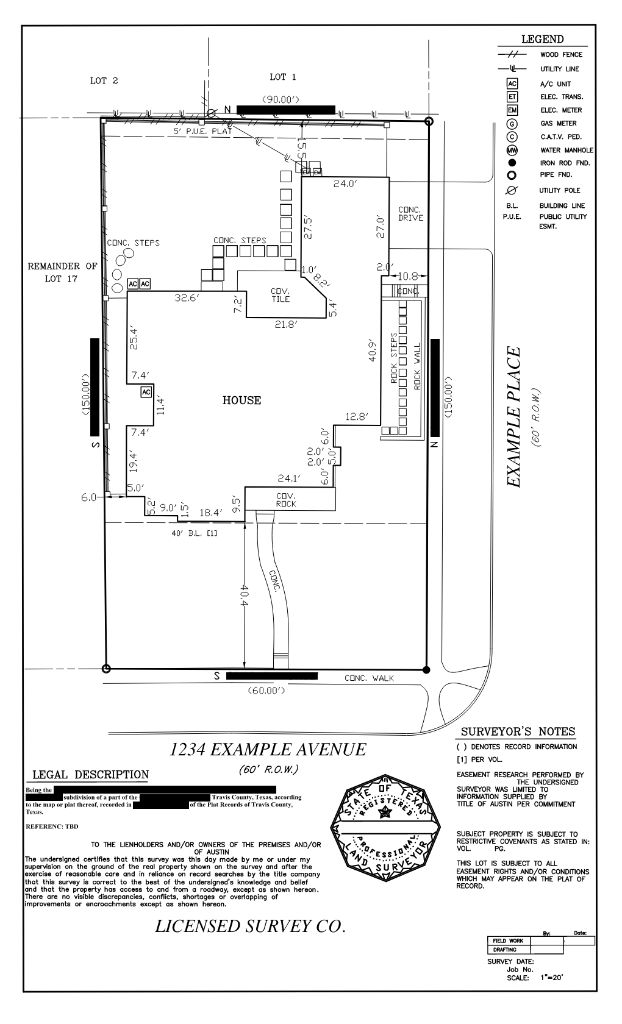
This guide breaks down everything you need to know about surveys in Texas real estate.
📋 What Is a Survey in Real Estate?
A survey is a professional drawing of a property that shows:
- The exact property boundaries and lot lines
- Location of the home, garage, fences, and other improvements
- Easements (such as utility lines or drainage access)
- Encroachments (like a neighbor's fence crossing onto your lot)
In simple terms: A survey confirms exactly what land you're buying and how it can be legally used.
💰 Who Pays for the Survey in Texas?
Surveys are a negotiable item in the Texas real estate contract.
How Survey Payment Works
If a seller has a recent, acceptable survey:
They can provide it to the buyer at no cost.
If no survey is available:
The party designated in the contract (buyer or seller) pays for a new one.
Cost: A standard residential survey in Texas usually ranges from $400 to $700, depending on lot size and complexity.
🔍 Why Is a Survey Necessary?
Surveys protect both buyers and sellers by clarifying:
- Boundaries – Ensures the buyer knows exactly what they're purchasing.
- Encroachments – Identifies potential disputes with neighbors.
- Easements – Shows rights granted to utility companies or municipalities.
- Title Policy Requirements – Lenders and title companies often require a current survey before issuing a policy.
Without a survey, buyers could face boundary disputes, HOA violations, or costly legal issues after closing.
⚠️ Common Issues That Surveys Uncover
Here are some real problems that surveys frequently reveal:
- 🚧 A fence or driveway built over the property line
- ⚡ Easements limiting where you can build a pool or add an extension
- 🏠 A shed or patio slab encroaching on a neighbor's yard
- 📍 Missing or incorrect property boundary markers
These issues can delay closing — or even cause a deal to fall through.
📖 Real-World Example
McKinney Home Purchase:
A buyer in McKinney purchases a home where the neighbor's fence runs two feet over the property line. The survey reveals the encroachment before closing. The buyer, seller, and neighbor resolve it in writing, avoiding a future legal battle.
Result: The survey saved the buyer from a potential lawsuit and protected their property rights from day one.
❓ Frequently Asked Questions
How long does a survey take in Texas?
Most residential surveys are completed within 1–2 weeks.
Does the surveyor need access inside the house?
No. Surveys are done outside, measuring the land and improvements.
Can an old survey be reused?
Yes, if it is accurate, legible, and the title company accepts it. Often the seller must sign a T-47 affidavit confirming no changes have been made since the survey.
✅ Final Takeaways
- ✅ A survey is essential in Texas real estate to confirm boundaries, easements, and improvements.
- ✅ Who pays is negotiable in the contract.
- ✅ Costs typically range from $400–$700.
- ✅ Issues revealed by surveys can affect property value and future use.
💡 Pro Tip: Always ask early in the process whether a current survey exists. If not, negotiate clearly who will pay for a new one. A clean, accurate survey saves time, money, and legal headaches after closing.
🇮🇹 My Approach to Surveys
As someone who moved from Italy to Texas, I understand that property surveys work differently here than in many European countries. In Italy, property boundaries are meticulously documented in government registries. In Texas, you need a professional surveyor to verify and confirm these details.
I bring that same European attention to detail to every transaction. When my clients need a survey, I:
- Recommend trusted, licensed surveyors in the DFW area
- Help you understand exactly what the survey shows
- Negotiate survey-related issues during the option period
- Ensure all boundary concerns are resolved before closing
You deserve to know exactly what you're buying — and I make sure you do.
Ready to buy or sell with confidence?
Let me guide you through every step of the process! 🇮🇹
